A Difference That Makes No Difference: UT v. Boston Scientific
(Posted Aug. 4, 2026, on LinkedIn)
Today we review an interesting case arising from the Court of Appeals for the Federal Circuit. In this lawsuit, Boston Scientific prevailed over the Board of Regents of the University of Texas (UT) in an outcome that completely and exhaustively reversed a jury verdict. As is often the case when it comes to patent litigation, it's really not clear who – if anyone – came out on top.
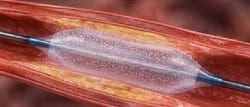
UT holds the 6,596,296 (the '296) patent, which describes a “drug-releasing biodegradable polymer fiber,” according to the Federal Circuit's Judge Richard Taranto, who wrote the unanimous decision. UT alleged that Boston Sci had infringed on this patent with an unnamed drug-eluting stent (DES). In 2017, when this litigation began, Boston Sci was marketing the Synergy DES, an everolimus-eluting stent and as far as I can tell, this is the only DES the company was distributing in the U.S. with an indication for the coronary arteries.
The '296 patent describes a polymer fiber that is capable of “controlled delivery of therapeutic agents,” including agents that provide an anti-angiogenic effect. The fibers described in this patent are said to feature coaxial layers that provide the controlled release of a drug agent. The fibers can be “woven, non-woven, braided, knitted” or a combination of two or more of these configurations, and this construct is then bathed in the eluting product, which coats the surfaces of the fiber. Keep that three-dimensional characterization in mind as it comes up later.
The purportedly infringing DES was a frame consisting of serpentine rings and is dipped into a drug of elution which “dries like a paint,” Taranto wrote. Boston Sci presented evidence at the trial suggesting that the so-called Song patent anticipated the '296 patent, in part because Song describes a drug agent that is dispersed throughout a fiber and is then released upon exposure to a solvent.
Medtronic also sang of Song
Interestingly, UT and Medtronic were also entangled in litigation over the '296 patent, and Medtronic recited Song in a 2019 inter partes review at PTO. At any rate, the jury not only found that Boston Sci had infringed on the '296 patent, but that it had done so willingly, a finding that can lead to up to triple damages for the original finding of infringement. That finding didn't hold up over time, but it took time for Boston Sci to overcome this lawsuit, which began in 2017. That gives you some idea of the time associated with patent litigation, with the per-case costs easily reaching seven figures according to one source.
Without dragging you, dear reader, through every tortured turn in the Federal Circuit's decision, Taranto noted that UT's argument was premised largely on the notion that “part of the stent's coating, and not the stent itself,” had infringed on the '296 patent's description of a fiber. This apparently required an analysis of what the coating would look like had it been produced without application to the stent. It would seem that UT had managed to obtain a favorable verdict from the jury in the pre-trial phase by persuading the district court judge to present the jury with a characterization of the fiber without regard to the molecular orientation of the fiber in the '296 patent at a microscopic level.
UT's expert testimony seems to have inadvertently disclosed the underlying tension between the allegations of infringement and this discussion of a purported relationship between the coating of the Boston Sci stent and the fiber as described in the '296 patent. Taranto highlighted that tension by remarking that the stent coating could never have presented as a thread-like structure because the coating was not chemically structured to present as an independent object. Indeed, UT's expert testified that he had not characterized the Boston Sci polymer coating as “thread-like,” a concession that seems to have had little effect on the jury.
When three minus two equals zero
Taranto went on to observe that the coating used in the Boston Sci stent is for all practical purposes two-dimensional whereas the fibers described in the '296 patent are three-dimensional. You have to appreciate Taranto's dry wit as seen in his remark that “one cannot reasonably say that a uniform sheet of paper contains a narrow strip simply because one can cut such a strip from it.”
At any rate, Taranto and his colleagues said Boston Sci is entitled to a judgment as a matter of law for non-infringement and Song's anticipation of the '296 patent. Having thus made such a determination, the allegation of willful infringement collapsed and the award of $42 million vanished like fog along with a $7.4 million interest award.
So what are the takeaways? According to one source, Boston Sci was smart to attempt to overturn the verdict via a petition for judgment as a matter of law rather than by contesting the jury's verdict. This apparently allowed the Federal Circuit to “independently assess the sufficiency of the evidence” rather than comb through the jury's findings piece by piece. The fact that UT's expert referenced unclaimed aspects of the invention also created problems for the allegation of infringement, but the argument that Song was, at bottom, a chewing-gum patent didn't help UT inasmuch as Song clearly referenced the possibility that its construct could be used to deliver a pharmaceutical product.
One final note here: The Patent and Trademark Office granted the '296 patent in 2003, so it had a few years of life left to it when the case arose in 2017. However, it has surely expired unless UT has obtained a continuation or some other means of extending the life of the patent.
So, was it worth all the trouble to sue Boston Sci? I can't say for certain one way or the other, but as is often the case, the attorneys involved in this litigation did A-okay!